
Yes, play feeds creativity. But it also does more than that. When we misplace the act of play in our lives, we put ourselves at a disadvantage.
“The opposite of play isn’t work; it is depression.”
– Dr. Stuart Brown
We need to play.
Both in big splashy ways like carnivals and beach days and in smaller sips when we doodle in our notes or tell bad dad jokes to friends (did you hear about the fire at the circus… it was in-tents).
Play also helps us pay attention and remember important information or events. It’s one of the reasons I bring a t-shirt gun on stage with me for my creativity talks, as a memorable touchpoint that helps the audience retain key messages.
No one was better at play than Salvador Dali. When he collaborated with Life Magazine photographer Philippe Halsman in 1948 their ultimate creation would become one of the most iconic photographs ever taken.
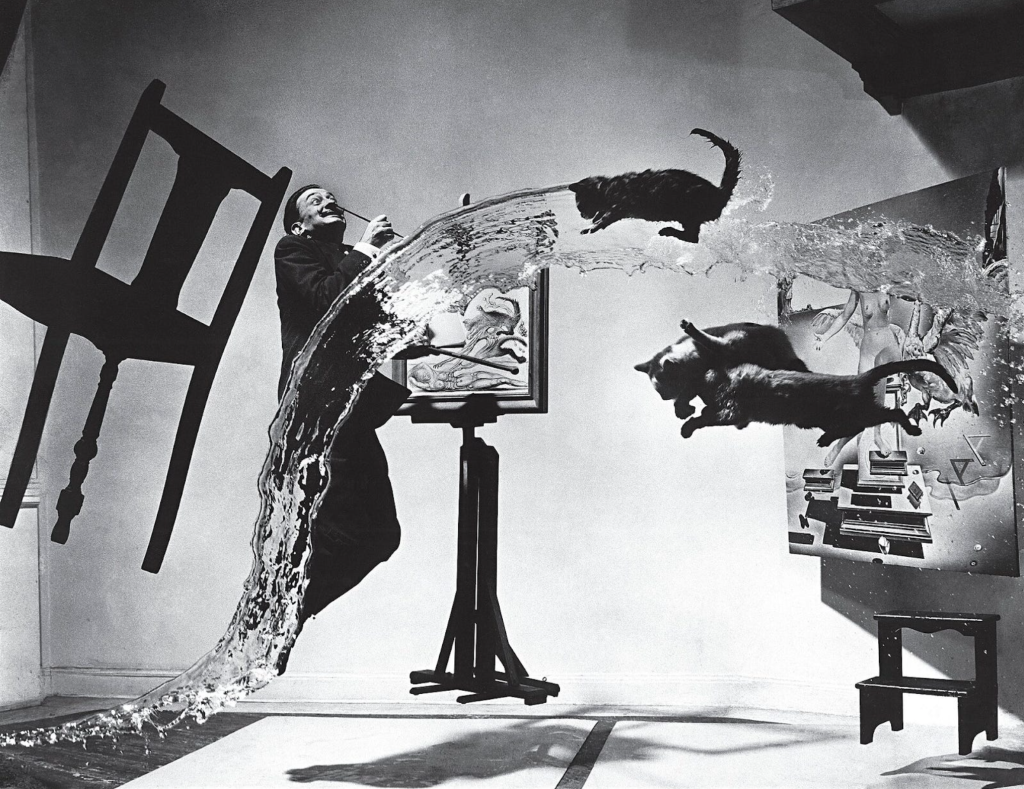
The photo, titled Dalí Atomicus, is brought to you by play.
Dali’s first idea for the collaboration was to blow up a duck with dynamite (I kid you not, a real duck), but Halsman refused. Instead, they created a photo where everything would be floating in the air, including three soaring cats and a bucket of water in flight.
It took over 26 attempts to get a shot with the cats, water, and Dali in the right spot, and without the behind-the-scenes helpers accidentally in the frame.
Halsman’s playful approach came from his other celebrity photo shoots. When he struggled to make famous people look natural, he’d ask them to jump. He explained, “When you ask a person to jump, their attention is on the act, and their mask falls, revealing the real person.” This small act of play made them more open to being themselves because play feeds creativity.
In addition to Dalí Atomicus, this playful technique led to a series of mid-air photos by Halsman.
Our sense of Play is a muscle.
Using it in small ways makes embracing bigger, more playful ideas easier. Regular play boosts confidence and helps you respond optimistically to challenges.
Play more games, create more things with your hands, wander, go on side quests, and be curious.
—-
In my book, The Case for More Bad Ideas, I go deeper into the power of play with real examples, best practices, and more on the research behind it all.